Top Window Replacement Packages: Strategic Evaluation of Bundled Fenestration Services
Residential building envelope retrofits present complex administrative and financial challenges for property owners. Replacing fenestration systems across a residential structure requires balancing frame material science, glass performance, structural integration, and specialized installation labor. Property owners frequently face commercial offerings that aggregate these variables into structured service bundles. Top Window Replacement Packages. Evaluating these options requires a clear understanding of building physics, procurement mechanics, and contractual terms.
Commercial bundling models have transformed how exterior home renovations are marketed and executed. Instead of calculating line items for frame extrusions, insulated glass units, flashing membranes, and disposal surcharges, contractors promote pre-configured service levels. These offerings promise predictable pricing and simplified decision-making. However, hidden omissions or mismatched material specifications can compromise building envelope integrity if left unscrutinized.
Analyzing structured fenestration offers requires moving beyond surface-level sales presentations. Evaluating top window replacement packages demands careful scrutiny of material durability, installation standards, warranty mechanics, and long-term asset performance. This reference guide establishes an analytical framework designed to help property owners assess bundled contracts with technical precision.
Understanding “top window replacement packages”
Defining the Bundled Service Paradigm
The phrase top window replacement packages refers to structured retail offerings that combine manufacturing procurement, site delivery, labor installation, and warranty coverage into fixed per-unit or whole-house pricing tiers. Contractors design these tiers to streamline consumer purchasing. Rather than requiring clients to select individual low-emissivity coatings or frame reinforcements separately, sales models group components into levels such as basic, mid-grade, and premium packages.
Vendor Perspectives and Pricing Dynamics
A primary source of confusion stems from how contractors construct these service packages. Manufacturers and installation outfits often design tiers around high-margin upsells rather than local climate necessities. A premium bundle might include decorative glass options while omitting critical structural flashing details or low-expansion insulation foam. Evaluating these tiers requires analyzing whether the bundled features enhance real-world thermal efficiency and structural longevity.
Risks of Oversimplified Package Selection
Selecting a bundled service offer without reviewing technical line items introduces operational risks. Property owners may assume that a complete package includes interior trim casing restoration or old unit disposal, only to face extra charges during installation. Furthermore, generic packages may specify pocket inserts where full-frame tear-outs are structurally necessary. True financial and physical protection requires verifying exact material and labor specifications within every tier.
Deep Contextual Background
Historical Shifts in Fenestration Contracting
The residential remodeling sector has undergone significant structural changes over the past half-century. Historically, home envelope repairs were handled through fragmented trade labor. Homeowners purchased raw materials directly from local lumber yards and hired independent carpenters for custom installation. This approach required direct oversight and detailed knowledge of construction practices.
Evolution of Retail Bundling Strategies
The late twentieth century saw the emergence of high-volume replacement franchises and direct-to-consumer sales organizations. These companies recognized that homeowners found itemized construction quotes confusing and intimidating. To streamline sales operations, firms created standardized pricing packages based on typical opening dimensions. This shift simplified retail transactions and accelerated project execution across suburban housing developments.
Supply Chain Integration Trends
Modern fenestration bundling relies heavily on integrated supply networks. Large retail contractors negotiate volume pricing directly with frame extruders and glass fabricators. By standardizing component selections into fixed package plans, contractors maintain predictable material costs while reducing inventory variation. Understanding this supply-chain dynamic explains why contractors often charge steep premiums for minor custom modifications outside established package tiers.
Conceptual Frameworks and Mental Models
The Tiered Value Realization Model
This framework evaluates bundled offers by separating aesthetic upgrades from structural enhancements. High-tier packages often emphasize decorative hardware, interior wood finishes, and custom color options. This model prioritizes structural investments, such as pultruded fiberglass frames and gas-filled glass units, over superficial cosmetic features.
The Whole-Scope Integration Framework
Evaluating bundled proposals requires checking every stage of the installation workflow. This framework verifies whether package quotes include rough opening structural inspections, self-adhering flashing membrane applications, low-expansion perimeter foam, custom aluminum exterior capping, and complete waste removal. Unspecified steps represent potential change orders or compromised installation standards.
The Dual-Warranty Component Matrix
Fenestration packages contain two distinct legal coverage structures: the manufacturer’s product warranty and the contractor’s labor warranty. This mental model evaluates both components independently, examining non-prorated glass coverage, frame color fading limits, transferability rights, and specific installation exclusion clauses.
Key Categories and Service Models
Standard Economy Bundles
These packages feature basic vinyl extrusions, double-pane Low-E glass, and standard pocket insert installation. They provide an economical solution for rental properties or mild climates, though color options remain limited and frame flex may occur over time.
Mid-Tier Performance Packages
Mid-grade offerings incorporate multi-chambered vinyl or composite framing, argon gas fills, and warm-edge spacer technology. They deliver balanced thermal resistance and structural durability suitable for most suburban residential upgrades.
Premium Architectural Tiers
High-end packages utilize pultruded fiberglass or aluminum-clad wood frames paired with triple-pane or vacuum-insulated glass units. They offer superior acoustic insulation, high structural load capacities, and extensive custom finish options.
Climate-Specific Regional Tiers
Specialized package plans engineered for specific geographical demands, such as impact-resistant laminated glass packages for coastal hurricane zones or high solar heat gain rejection packages for desert environments.
Whole-House Phased Packages
Contractors structure these plans to replace windows across a property over multiple scheduled stages. This allows homeowners to distribute capital expenditures across several fiscal quarters while locking in bulk material pricing.
Turnkey Historic Preservation Packages
Custom bundled plans that combine historical review board documentation, authentic exterior trim profiles, and specialized interior storm panels to meet municipal historic district mandates.
| Package Category | Initial Investment | Frame Materiality | Thermal Performance | Labor Complexity |
| Standard Economy | Low | Rigid Vinyl | Moderate | Low (Pocket Insert) |
| Mid-Tier Performance | Moderate | Multi-Chamber Vinyl | High | Moderate |
| Premium Architectural | High | Fiberglass / Clad Wood | Maximum | High (Full-Frame) |
| Coastal Impact | High | Reinforced Metal/Fiber | High | High (Structural Anchors) |
| Phased Whole-House | Variable | Choice Dependent | High | Staggered Execution |
Decision Logic for Package Selection
Property owners should establish physical building needs before reviewing package brochures. If existing framing exhibits structural decay or rot, packages specifying simple pocket inserts must be rejected in favor of full-frame options. For homes in extreme climate zones, prioritizing high-tier glass packages over cosmetic interior finishes ensures optimal long-term energy efficiency and interior comfort.
Detailed Real-World Scenarios Top Window Replacement Packages
Scenario A: Suburban Whole-House Renovation
A fifteen-window replacement project on a two-story home with aging vinyl siding and budget constraints requires careful planning. Selecting a mid-tier performance vinyl package installed by factory-trained crews provides strong thermal performance. This choice protects capital reserves while avoiding cheap economy tiers prone to seal failure.
Scenario B: Historic District Framing Retrofit
A historic residence requiring exact historical visual matching under municipal preservation board oversight presents severe regulatory constraints. Standard off-the-shelf economy packages fail compliance checks, risking stop-work orders. Choosing a specialized historic preservation package using wood-clad units preserves architectural character and satisfies municipal guidelines.
Scenario C: Coastal High-Wind Zone Upgrade
A coastal home subject to mandatory wind-borne debris codes and high wind loads demands high structural resistance. Standard mid-tier packages lack impact ratings, failing building inspections. Investing in a certified coastal package with laminated glass and structural anchor integration ensures storm resilience and lowers property insurance premiums.
Scenario D: Multi-Family Investment Property
Replacing windows across multiple rental units requires minimal tenant disruption and predictable pricing. Utilizing a standardized economy-plus package installed through a phased agreement reduces bulk material costs while modernizing the property portfolio efficiently.
Planning, Cost, and Resource Dynamics
Direct and Indirect Financial Allocation
Project pricing extends beyond base retail window costs. Direct costs include frame manufacturing, glass fabrication, delivery logistics, specialized labor, flashing materials, and municipal permits. Indirect costs involve waste disposal fees, interior paint touch-ups, scaffolding rentals for elevated openings, and temporary climate control setup.
Understanding Package Pricing Variability
Contractor quotes vary based on corporate overhead, sales commission structures, and labor models. High-overhead direct-sales organizations build marketing costs into package margins. Independent local contractors often offer comparable material tiers at lower prices, though their financing options may be more limited.
| Package Tier / Scope | Average Cost Per Opening | Primary Cost Drivers |
| Basic Vinyl Insert Package | $500 – $900 | Standard sizing, minimal trim, basic glass |
| Mid-Range Composite Package | $950 – $1,700 | Argon gas, custom colors, full perimeter sealing |
| Premium Fiberglass Package | $1,800 – $3,200+ | Triple-pane glass, full-frame removal, interior trim |
| Coastal Impact Rated Package | $1,600 – $3,600+ | Laminated glass, engineering permits, heavy anchors |
Tools, Strategies, and Support Systems
Essential Evaluation and Diagnostic Tools
-
Digital Measurement Verification Logs: Structured forms used to track rough opening squareness, depth, and sill level before signing package orders.
-
Thermal Imaging Scanners: Infrared tools deployed before and after installation to verify thermal resistance and detect air leakage.
-
Scope Cross-Reference Matrices: Line-item templates designed to compare inclusions across competing contractor package proposals.
-
NFRC Rating Verification Portals: Independent databases used to verify certified U-factor and Solar Heat Gain Coefficient metrics.
Professional Support Networks
-
Municipal Building Inspectors: Local officials who review framing tie-ins, flashing adherence, and code compliance.
-
Certified Energy Auditors: Building science experts who perform blower door testing to quantify whole-house envelope seal improvements.
-
Construction Contract Advisors: Legal professionals who review high-value package agreements to ensure fair payment schedules and clear lien releases.
Risk Landscape and Failure Modes
Unclear Labor Allocation and Subcontracting
A common failure mode occurs when sales representatives promise internal installation crews, but the company assigns unvetted third-party sub-crews. Subcontractors paid on piece-rate schedules may prioritize speed over meticulous flashing procedures, increasing water infiltration risks.
Frame Distortion and Seal Failures
Improperly shimming window frames during installation causes frame twisting, binding operating sashes and stressing glass units. Omitting head flashing or using incompatible sealants leads to premature seal degradation, allowing moisture to rot structural framing studs.
Deposit Exposure and Mechanics’ Liens
Releasing large upfront deposits before materials arrive or paying final balances before inspection sign-offs exposes property owners to financial loss. If contractors fail to pay material suppliers, suppliers can file mechanics’ liens against the property.
Governance, Maintenance, and Long-Term Adaptation
Project Governance and Site Oversight
Effective management requires clear communication protocols and written change-order rules before installation begins. Homeowners should require daily progress updates and conduct structured site inspections before releasing progress payments.
Inspection Triggers and Review Points
-
Pre-Installation Trigger: Inspect delivery crates to confirm unit dimensions, frame finishes, and glass packages match order forms.
-
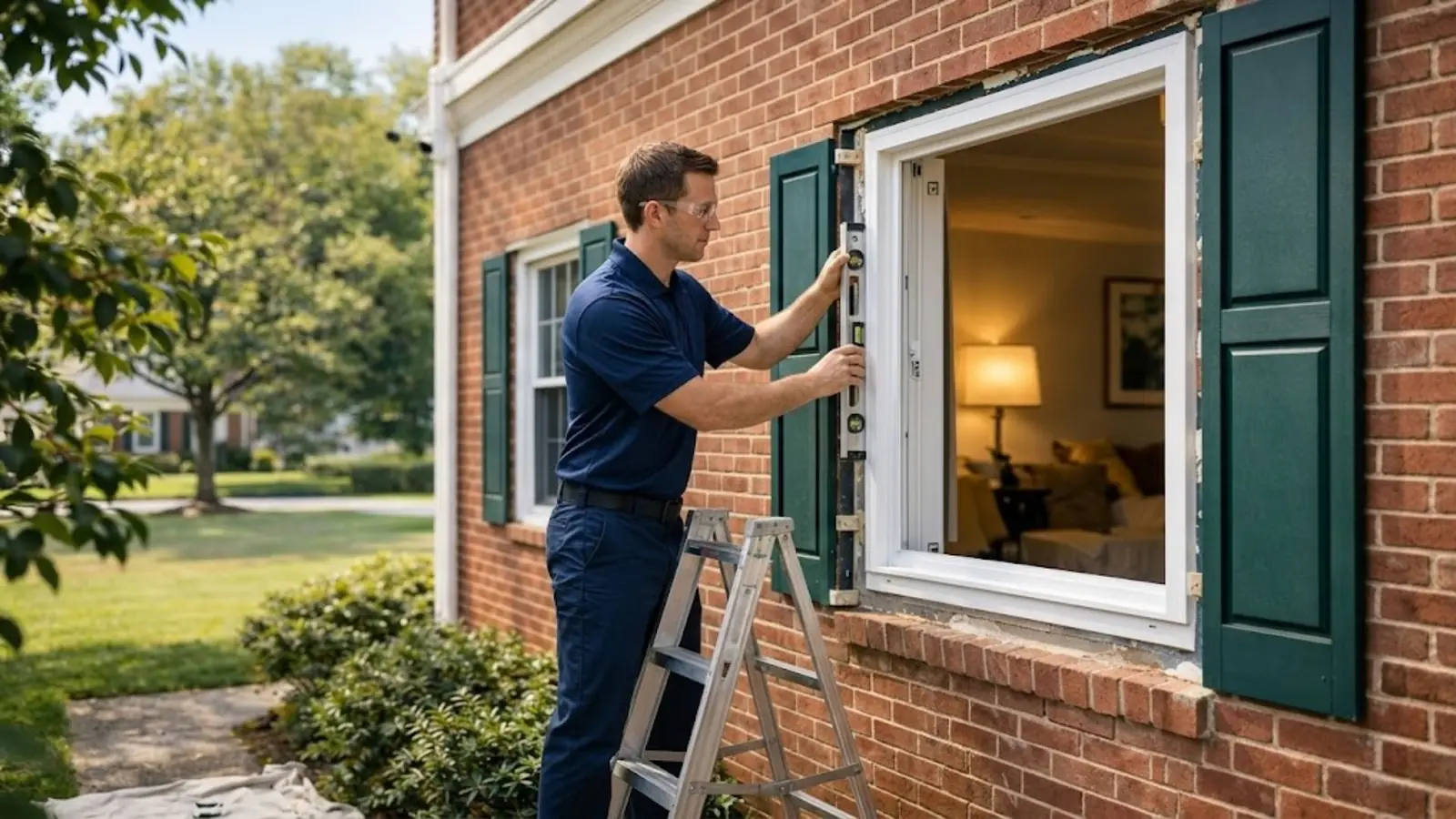
Mid-Installation Trigger: Check exposed rough openings once old frames are removed to ensure rotted wood is replaced before installing new units.
-
Post-Installation Trigger: Perform a thorough walkthrough to verify smooth sash operation, secure locks, and continuous exterior sealant beads.
Long-Term Maintenance Protocols
-
Clean tracks and clear drainage weep holes semi-annually to prevent water backup.
-
Inspect exterior perimeter caulking annually, reapplying high-grade polyurethane sealant where cracks appear.
-
Lubricate operating hinges, tracks, and locking hardware yearly using non-staining silicone sprays.
-
Maintain indoor relative humidity control to prevent condensation on glass surfaces during severe winter freezes.
Measurement, Tracking, and Evaluation
Leading and Lagging Performance Indicators
Leading indicators include verifying contractor licensing, reviewing active liability insurance certificates, and confirming explicit flashing protocols in written contracts. Lagging indicators encompass reduced seasonal utility bills, zero moisture infiltration during heavy rain, and smooth sash operation across annual climate cycles.
Documentation Standards
-
Maintain a digital archive containing signed contracts, approved shop drawings, building permits, and lien release waivers.
-
Keep manufacturer warranty certificates and specific installer labor guarantees in a permanent property file.
-
Record thermal imaging reports before and after installation to document thermal envelope improvements.
Common Misconceptions and Oversimplifications Top Window Replacement Packages
Myth 1: Premium Packages Eliminate Maintenance Needs
Even high-end fiberglass and aluminum-clad systems require periodic track cleaning, seal inspection, and hardware lubrication to operate smoothly.
Myth 2: All Package Plans Use Identical Installation Quality
Package offers often focus heavily on glass and frame specifications while using basic, low-cost installation methods unless premium full-frame labor is specified.
Myth 3: Package Discounts Are Always Limited-Time Offers
High-pressure sales tactics offering immediate discounts are common retail practices; reputable contractors provide stable quotes valid for thirty days.
Myth 4: Triple-Pane Glass Is Mandatory for Every Home
While triple-pane glass benefits cold northern regions, mid-tier double-pane Low-E units often provide identical practical efficiency in moderate climates at lower costs.
Myth 5: Lifetime Warranties Cover All Future Repair Labor
Most lifetime warranties include exclusions, pro-rated glass schedules, and short labor coverage windows ranging from one to five years.
Myth 6: Insert Packages Work in Any Existing Frame
Inserting new sashes into rotted or out-of-square framing hides structural issues without fixing the underlying water damage.
Ethical, Practical, and Contextual Considerations
Evaluating bundled renovation offers requires balancing immediate financial costs with long-term building durability. Selecting cheap packages that compromise on labor safety or waste disposal creates negative environmental and community impacts. Responsible contracting supports businesses that pay fair wages, maintain comprehensive insurance coverage, and dispose of old materials safely.
Systematic contract evaluation helps property owners protect their financial investments and maintain building safety standards over time. Researching top window replacement packages with technical discipline ensures that chosen providers deliver lasting value, comfort, and peace of mind.
Conclusion
Navigating fenestration options requires systematic analysis, technical understanding, and careful review of contract terms. Property owners who look beyond basic sales presentations to evaluate labor structures, flashing details, and warranty mechanics protect their investments effectively. Careful evaluation transforms a complex renovation into a structured upgrade that enhances property value, energy efficiency, and indoor comfort for decades.